Non-Profit Solutions Lab
Back in early 2020, when the pandemic was still just whispers and murmurs, there was a human rights gathering in Caroline, AB. At that time, some of the participants in attendance, who all happened to be members of Righting Relations (RR), were going through distress in the nonprofit organizations where they worked, and they connected over those shared experiences. After the event, that spark was still there, and about six months into COVID lockdown, the group started to come together as a small working group discussing toxicity in nonprofits. This is what became the Non-Profit Sector (NPS) Change Lab.
How It Evolved
The team started with a survey to get a sense of what was happening in the non-profit sector through the lived experience of RR members who also worked at non-profits. Change Lab participants were remunerated for their time as part of a deliberate intention to be truthful to the ethos of Righting Relations and the change lab itself.
The survey results made it clear that many RR members were going through a tough time in their own workplaces, which raised the question, “What do we need to address within the non-profit sector as Righting Relations?” At the same time, Righting Relations had incorporated as a non-profit, creating an opportunity to apply the learnings from members’ experiences outside of RR to conversations about structure and governance happening internally.
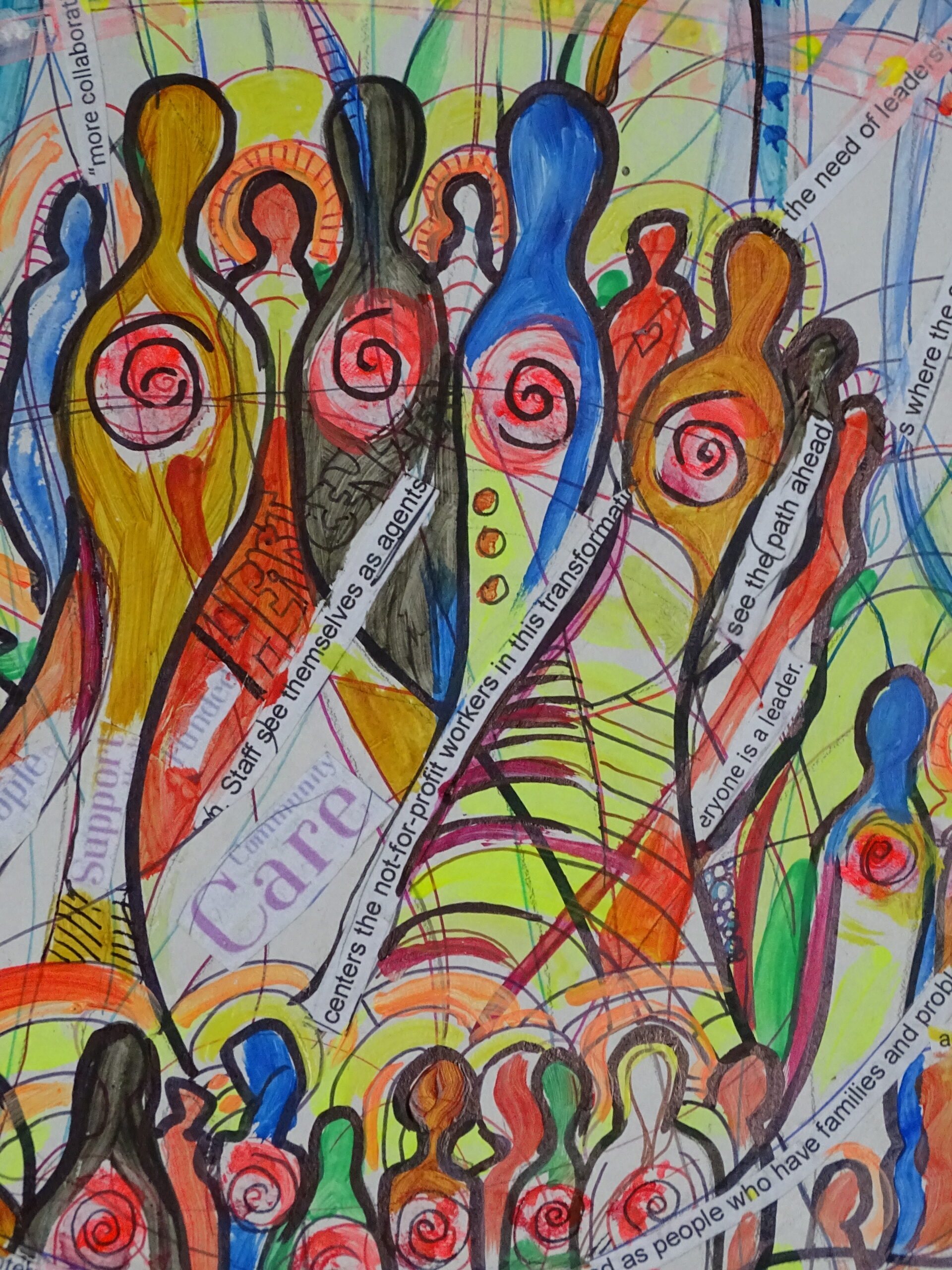
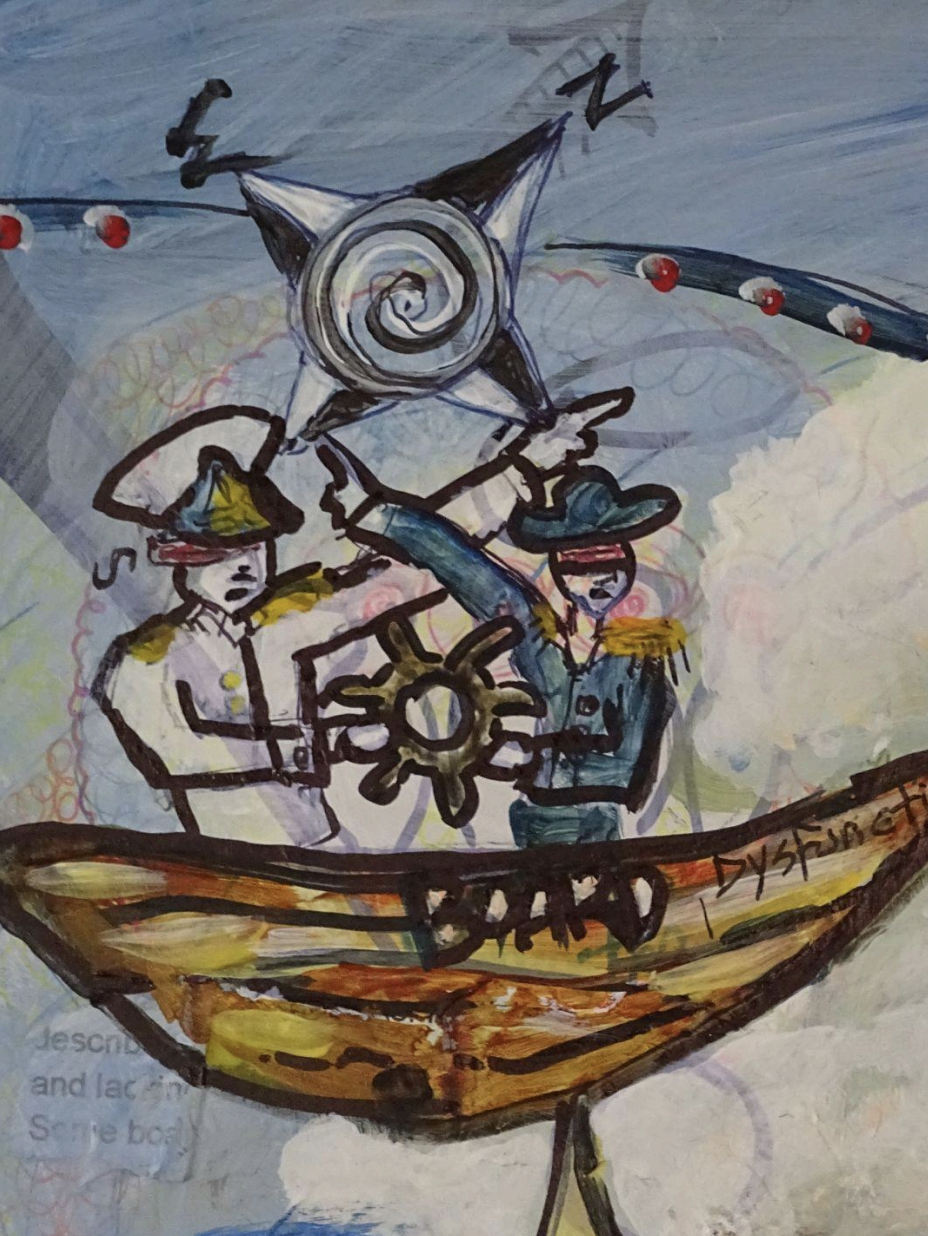
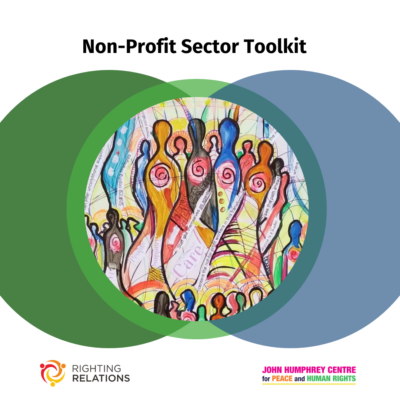
When pulling the results from the survey together into a report, the team clearly saw the path forward. People who participated understood the importance of the sector, and were committed to transforming their workplaces and contributing to radical social change. Furthermore, one member had a vision of facilitating using this knowledge, and advocated for going beyond a report and building a tool that people could engage with. This is what led to the creation of the Non-Profit Sector toolkit: Addressing Toxicity in Non-Profits. The first step in making this knowledge relatable was the creation of visual representations of the research report; an Edmonton-based artist also commissioned three pieces of art.
To make the toolkit a reality, the NPS team first met in-person for a weekend to immerse themselves in story-sharing and conversations about turning the report into a practical toolkit. The team also developed their understanding of white supremacy and its manifestations in the non-profit sector, while imagining alternative ways of working in the sector. Working in-person was important because it gave room to build relationships and have deeper conversations.
Throughout the project, the team was influenced by and able to actively respond to events as they happened. The impact of the Black Lives Matter protests in the summer of 2020, for example, laid the groundwork for conversations about the ways that white supremacy infiltrates systems and institutions, including non-profits. Later in the project, as the toolkit was in the final stages of production, the US National Labour Commission released a ruling making it illegal for severance packages to be dependent on signing a Non-Disclosure Agreement (NDA). This supported a section of the toolkit that discussed the way that NDAs are commonly used in negative ways in the non-profit sector to silence workers. Having the flexibility to work in real-time allowed the Change Lab to connect and engage with relevant events that were actively impacting folks working in the sector.
That time and flexibility also meant that the information, activities, and reflections could “cook” and come out the best version of themselves. Several iterations of the toolkit were shared with different members of Righting Relations, including the National Steering Committee (NSC), the grounding agency in the West Hub, and the Gender and Sexually Expansive Change Lab (GSE). The work evolved in constructive ways as a result of that engagement.
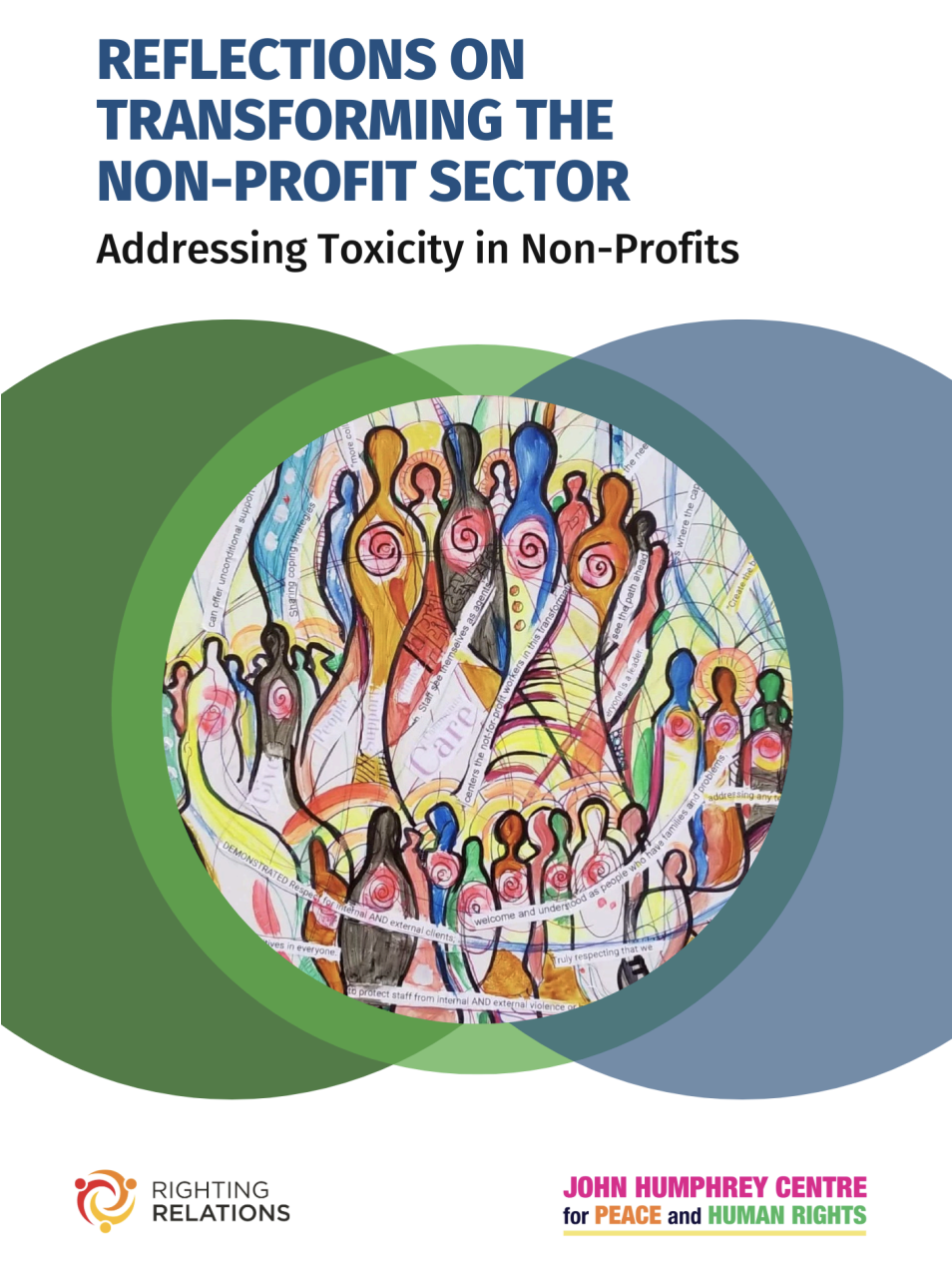
Transforming the Non-Profit Sector Report
Toolkit: Reflections on Transforming the Non-Profit Sector
Resources
Explore Tools and Resources from the Change Labs.
Change LabNational
Change LabNational
Change Lab
“I’ve had [other educators] comment on my methods, and I talk about them as anti-oppressive practices: these are principles that show how you can do things in a more equitable way. So for me, [the toolkit] has sharpened my way of speaking about white supremacy and inequitable or oppressive approaches, and showing that these aren’t just theories out there.”
Eveline